
The Shared Ground: How Peace Education and Environmental Action Can Work Together
Introduction
In a conflict-affected community, a damaged water source or contested farmland is more than an environmental problem. It can deepen old grievances, expose unequal access and make daily survival a test of who holds power. Any effective response must take these pressures into account.
Environmental peacebuilding links environmental work with efforts to build trust, manage disputes and widen participation. It does not assume that planting trees can resolve political conflict. Rather, cooperation on shared needs can open space for dialogue, while peace education helps people understand how decisions about land, water and livelihoods affect others. In practice, environmental peacebuilding connects local environmental priorities with fair processes for resolving disagreements.
The two approaches work best together. Peace education builds the skills and habits of cooperation; environmental action gives people a practical setting in which to use them. Dialogue lessons may feel abstract if they ignore who controls a spring. Restoring a water source without addressing exclusion, meanwhile, can reinforce the tensions the project aims to ease. This is why environmental peacebuilding needs both practical action and attention to relationships.
Analysis of teams or players
The first group includes educators, facilitators and local mediators. Their role goes beyond teaching tolerance. They help people listen across divides, recognise how rumours and stereotypes shape behaviour, and disagree without turning disputes into threats. These skills matter most when discussions connect to real decisions.
The second group includes environmental practitioners and people who depend on local ecosystems: farmers, pastoralists, fishers, water committees and community leaders. Their knowledge can show where pressure is building and which solutions are practical. Plans made without them may look efficient on paper but fail to account for seasonal needs, local customs or unequal access. For environmental peacebuilding to be locally grounded, these resource users must help shape the work.
These groups are not always separate. A teacher may also be a farmer, and a water committee member may act as a mediator. The strongest approach gives community members meaningful roles in setting priorities, gathering information and resolving disagreements. Outside organisations can offer technical support, but visibility is not the same as leadership, and attendance does not guarantee consent.
This distinction matters in natural resource cooperation. Shared management gives people regular reasons to communicate, but forming a committee does not automatically make it inclusive. Who gets a seat, whose views and knowledge count, and how benefits are shared all affect whether cooperation is trusted. Without fair procedures, a new structure can become another source of competition. Effective environmental peacebuilding therefore treats inclusion as an ongoing practice, not a box to check.
Key factors
Trust depends on both process and outcome. Communities need to understand how decisions are made, what information informs them and where complaints can be raised. Clear rules for choosing participants, sharing resources and reviewing decisions can reduce suspicion. Vague promises often do the opposite. Environmental peacebuilding depends on such transparent arrangements to make cooperation credible.
Conflict sensitivity is also essential. Environmental work takes place within political and social landscapes. A restoration project may change access to grazing land, fuel or water, benefiting some groups more than others. Mapping stakeholders and likely effects before work begins helps ensure that a technical solution is not mistaken for a neutral one.
Peace education can deepen this analysis by bringing power and perception into the discussion. Participants can explore how identity, past harm and misinformation affect disputes, then practise checking claims and negotiating practical arrangements. The goal is not to make people agree about history or erase the causes of conflict. It is to help them manage disagreements over resources that remain essential to daily life.
Climate security adds another consideration. Changes in rainfall, heat or growing conditions can put more pressure on livelihoods and public services, but climate stress does not automatically lead to violence. Its effects depend on governance, inequality, mobility and people’s ability to adapt. Treating climate security as a reason for joint planning, rather than a prediction of inevitable conflict, leaves more room for local choices. Environmental peacebuilding can help communities make those choices through dialogue and shared planning.
Timing and continuity matter too. A project that brings people together briefly and ends before disputes arise may build little lasting capacity. Environmental work requires maintenance and repeated decisions, while trust between groups takes time. Programmes need realistic plans for follow-up, local ownership and changes in leadership or conditions. Strong environmental peacebuilding invests in these longer-term relationships as well as immediate results.
Finally, measure more than outputs. The number of seedlings planted or workshops held does not show whether relationships have changed. More useful questions include whether people from different groups can safely raise concerns, whether resource decisions are seen as fair and whether local mechanisms can address disputes before they escalate. These indicators are harder to measure, but they say more about community resilience.
Match scenario
Imagine a community where water access is contested and environmental conditions are putting livelihoods under pressure. The first step should not be a public launch of a ready-made solution. It should be careful listening: how people use the resource, what disputes already exist, which groups are missing from formal discussions and what local arrangements have worked in the past. In conflict-affected communities, this early listening can help environmental peacebuilding avoid reinforcing existing exclusions.
Peace educators and environmental practitioners can then build a process together. Small, mixed-group sessions can establish ground rules, while local resource users map needs and agree on a manageable first task. This might mean monitoring access, maintaining a shared facility or testing a locally chosen conservation measure. The intervention should reflect community priorities, not a generic playbook.
Disagreements are likely. One group may want immediate access, while another favours limits to protect future supply. Here, education must go beyond slogans. Facilitators can help participants distinguish verified information from rumour, explain trade-offs and negotiate temporary rules with a clear review process.
There is no guaranteed final outcome. New conditions, uneven compliance or a change in local leadership can put even a fair agreement under strain. Regular reviews, transparent reporting and a process for revising rules can help, without reopening every old grievance. Cooperation is more likely to withstand setbacks when people can challenge decisions without being excluded.
Environmental peacebuilding does not turn an environmental project into a peace campaign. It connects practical work with fair participation, awareness of conflict and accountability. The results may be modest: a functioning local process, clearer responsibilities and fewer reasons for groups to feel ignored. In fragile settings, such gains can provide a foundation for further progress.
Conclusion
The partnership between peace education and environmental action cannot erase conflict. It can, however, help communities handle disagreements more safely and make decisions about resources more legitimate.
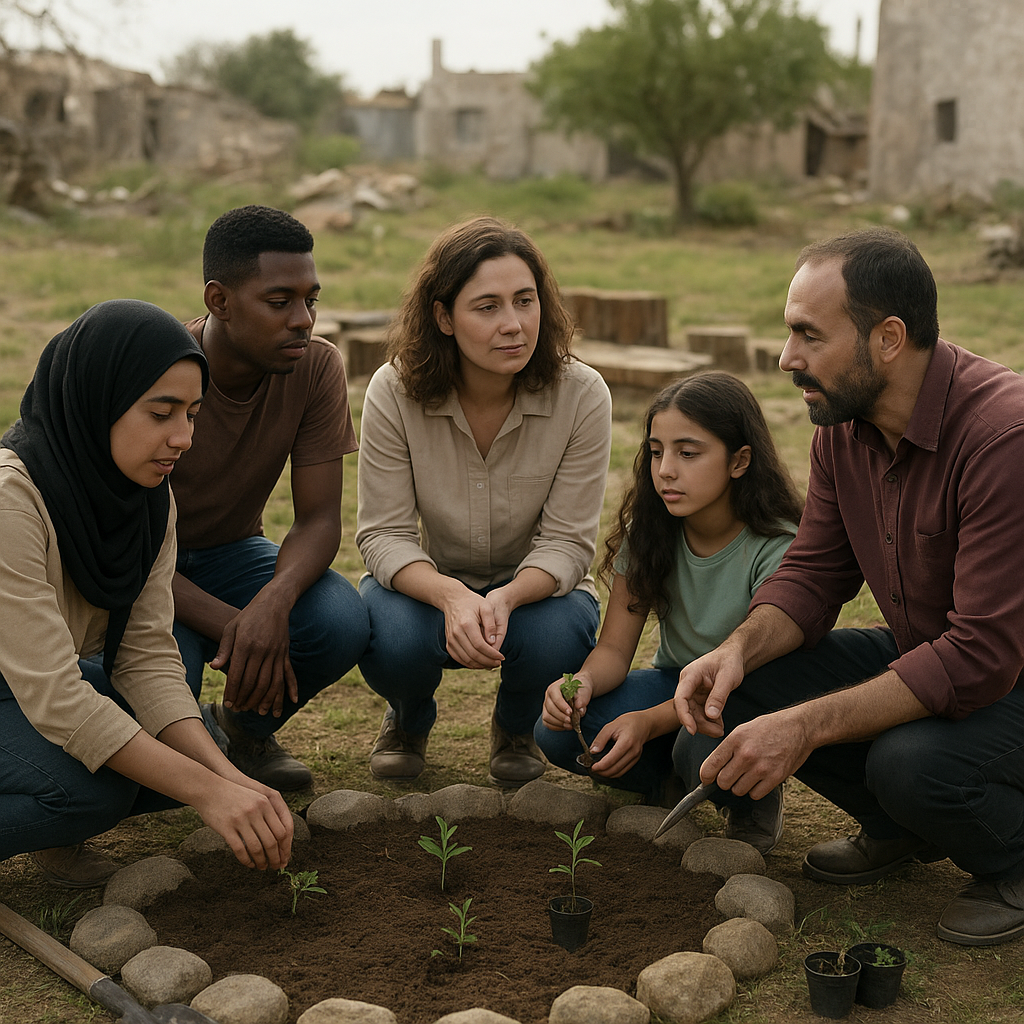
This takes more than good intentions. It requires local leadership, fair rules, attention to power and enough continuity to learn from setbacks. When these conditions are in place, environmental peacebuilding can turn a shared challenge into a practical reason to cooperate—and build community resilience through action rather than rhetoric.