
The Role of Education in Preventing Conflict and Strengthening Social Cohesion
Introduction
Education is often seen as a path out of poverty or a foundation for economic growth. Its less visible role may be just as important: helping people understand difference, respond to disagreement and decide who belongs in society.
This role is not automatic. Classrooms can challenge prejudice, but they can also reinforce it through exclusion, unequal treatment or curricula that present one group’s experience as the national story. Peace education matters not because schools can resolve political disputes on their own, but because they help shape how people approach them. At its best, peace education makes respect, fairness and careful listening part of everyday learning.
Comparing this work to sport can be useful, up to a point. Social cohesion is not a scoreboard, and no reliable statistics show that a particular lesson prevents a particular conflict. The more important question is whether education gives young people the knowledge, relationships and skills to address grievances without turning difference into hostility. This is where peace education can support conflict prevention without promising simple solutions.
Who shapes the learning environment
The key players are not rival sides but the people and institutions that shape the learning environment. Students bring family histories, identities and assumptions. Teachers set the terms of daily discussion, while school leaders decide whether those terms are backed by policy and resources.
Teachers have an important role, but they cannot carry the whole burden. Expecting one educator to mediate deep political divisions without training, support or protection is unrealistic. Effective practice takes preparation: teachers need to know how to handle charged discussions, correct harmful claims and make room for disagreement without allowing intimidation. Peace education works best when educators have the skills and institutional backing to guide these conversations.
Students are not just recipients of lessons. Working with peers across social, linguistic or religious divisions gives them a chance to question assumptions through everyday cooperation. Inclusive classrooms do not erase differences; they allow students to take part without leaving their identities at the door. In this way, peace education connects belonging with shared responsibility.
Families and local organisations also shape students’ experience. When classroom messages differ from what students hear at home or in their communities, schools should engage with that tension rather than assign blame. They build trust by listening, explaining their approach and recognising that credibility takes time. These relationships can extend peace education beyond school walls and contribute to community peacebuilding.
Unequal access to quality education is another obstacle. When resources, safety or opportunities are distributed along social lines, lessons about mutual respect can ring hollow. Preventing conflict means addressing who has access to learning, whose language and history are represented, and whether students experience fairness at school. Peace education must therefore include attention to equity, not only classroom activities.
Key factors
First, what students learn matters. They need more than slogans about tolerance: they need age-appropriate ways to examine historical events, competing accounts and the consequences of violence. Honest teaching does not mean treating every claim as equally credible. It means distinguishing evidence from assumption while recognising that communities may remember the past differently. Peace education can help students approach these accounts with curiosity and care.
Second, students need opportunities to practise discussion. This means listening without dismissing others, asking clear questions, checking the evidence behind a claim and disagreeing without attacking the person who holds it. These dialogue skills develop with practice, especially when adults model them under pressure. Making time to practise dialogue skills is a practical part of peace education.
Third, students need to feel safe taking part. Inclusive classrooms set clear expectations against harassment, ensure fair attention from teachers and have a process for addressing harm. Without these safeguards, open discussion can give the loudest voices even more space. Peace education depends on learning environments where students can speak and be heard without fear.
Fourth, learning should lead to meaningful cooperation. Shared projects, peer mediation and collaborative problem-solving let students work toward common goals without requiring them to agree on every issue. The aim is not to stage harmony, but to learn how to manage friction while maintaining relationships. These practices turn peace education into something students can apply in daily life.
Finally, peace education needs to be sustained and relevant to local circumstances. A one-off workshop cannot make up for discrimination at school or curricula that ignore conflicts students encounter in their own lives. Teachers need time, appropriate materials and professional support. School leaders need to assess whether policies improve students’ sense of belonging as well as academic performance. This sustained approach makes peace education more credible and supports conflict prevention over time.
Education is not neutral simply because it avoids difficult subjects. Silence can leave dominant narratives unchallenged and rumours unchecked. But poorly facilitated lessons can also deepen divisions. The aim is not to avoid controversy, but to examine it safely, use evidence and consider more than one perspective. Peace education helps schools approach difficult topics with care rather than treating silence as a solution.
A classroom scenario
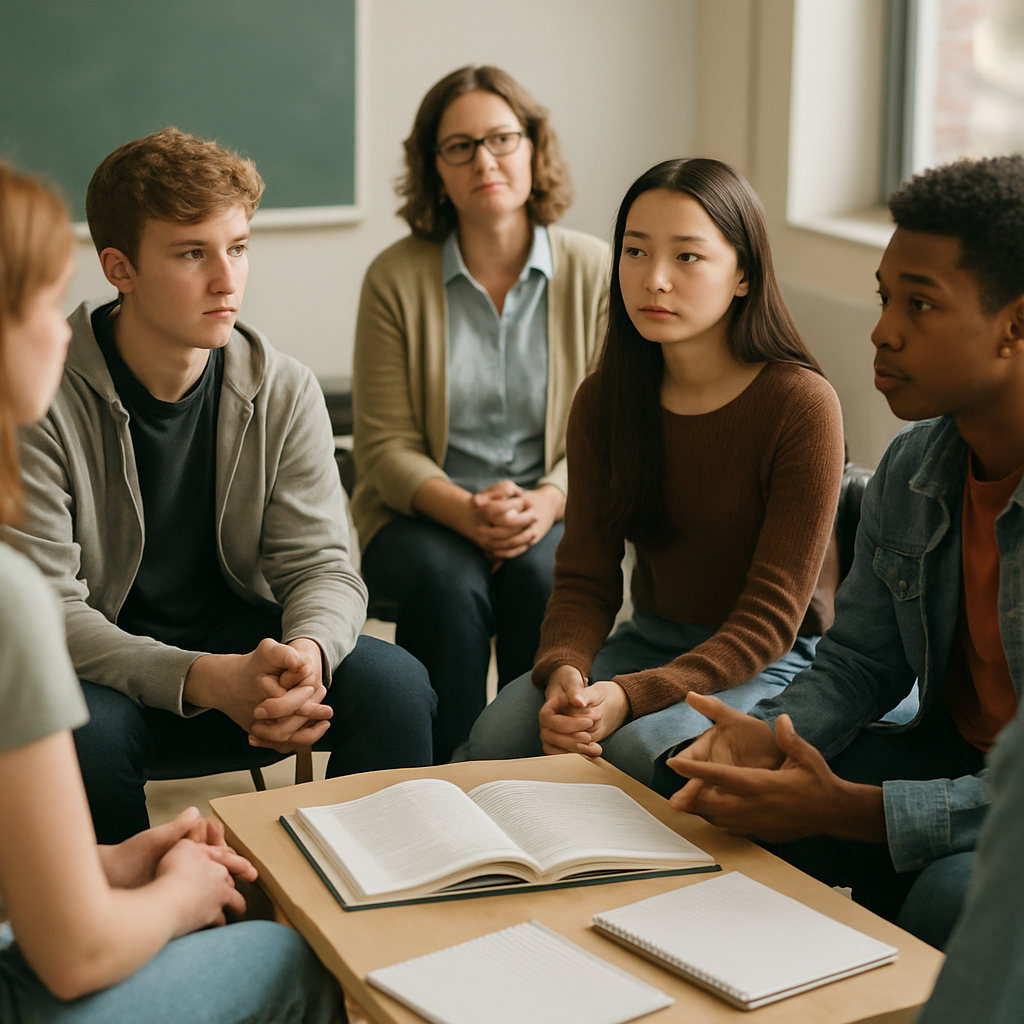
Imagine a school where a tense public dispute spills into the classroom. Students arrive with conflicting accounts, and a careless comment quickly becomes a test of loyalty. Rather than declare a winner, the teacher sets ground rules, separates verifiable information from speculation and gives affected students a chance to speak without making them representatives of an entire group. This is peace education in practice: guiding students through disagreement while protecting their dignity.
The class then examines the issue using relevant context and reliable evidence. In small groups, students identify what is known, what remains contested and which questions need further investigation. This is not a simulated peace treaty; it is a chance to practise resisting the leap from disagreement to accusation. The exercise builds dialogue skills and shows how peace education can support thoughtful engagement.
Success depends less on whether everyone leaves with the same opinion than on what happens next. Can students keep working together, challenge an argument without threatening its speaker and recognise when a discussion has caused harm? If so, the school has made a modest but meaningful contribution to peacebuilding in the community. Over time, this kind of learning can link peace education with wider community peacebuilding.
This scenario is hypothetical, not a claim about any particular school or a guaranteed outcome. Education cannot replace accountable institutions, public safety or political solutions. It can help prepare citizens to demand those things without treating their neighbours as enemies. Peace education is one contribution to this broader work, not a substitute for it.
Conclusion
Peace education has practical value. It helps students assess claims, navigate disagreement and build relationships across divisions that conflict can exploit. Combined with fair access, representative teaching and trustworthy school systems, these skills can strengthen social cohesion. By cultivating dialogue skills and supporting inclusive classrooms, peace education can contribute to conflict prevention and community peacebuilding.
Schools cannot guarantee peace, and no curriculum can repair injustice on its own. But education can shape what happens when people next disagree: whether the dispute becomes a contest for dominance or a difficult conversation in which they remain willing to listen. Peace education offers a way to practise that kind of engagement. That is a better place to start.