
Digital Learning Partnerships Expanding Education Access in Remote Areas
Introduction
In remote areas, distance means more than miles on a map. There may be fewer nearby schools, limited access to specialist teachers and long journeys that make regular attendance difficult. Digital learning can help overcome some of these barriers, but devices and internet access alone do not create a functioning classroom.
Success depends on whether a learning model reflects local realities or assumes that every student has reliable power, internet access and support at home. Partnerships among schools, public agencies, community organisations and technology providers can widen access to digital learning. Their success depends less on the novelty of the technology than on how well it fits learners’ lives. Effective digital learning also depends on practical support that helps students use materials consistently.
Remote communities do not all face the same challenges. Some need better internet access; others need relevant teaching materials, accessible devices or support for students who have fallen behind. Partnerships that begin by listening can identify the real barriers. Those that start with a product risk solving the wrong problem, even when it is marketed as digital learning.
Who needs to be involved?
Schools and teachers understand which students are missing lessons, where the curriculum needs adapting and when a learner is struggling. If educators are involved only after a platform has been chosen, they may have to fit it around existing teaching, assessment and workloads.
Technology partners provide tools, content and technical expertise. Their work should be judged by how well those tools function in local conditions. A platform that requires constant high-speed internet may look impressive in a demonstration but prove unusable where service is unreliable. Offline access, low-bandwidth options and straightforward maintenance can determine whether students are able to participate. This kind of learning technology should be selected to meet classroom needs, not simply because it is new.
Public agencies can provide continuity beyond the life of a short-term project. They can link local initiatives with curriculum requirements, teacher development and long-term planning. Their involvement also helps clarify procurement, data protection and responsibility for equipment repairs.
Community organisations and families should be involved, too. They can identify language needs, safe places to study and the daily pressures that affect attendance. Their participation can build trust, especially when families have concerns about how children’s information is collected or how new technology will be used.
Partnerships need a careful balance. A project led entirely by a vendor may prioritise deployment, while a school acting alone may lack funding and technical support. Stronger education partnerships give each partner a clear role and keep teaching goals and learners’ experiences at the centre.
Key factors
Connectivity is essential, but it is only part of the picture. A stable connection provides access to lessons, libraries and teacher feedback. A weak one can make live instruction frustrating. Plans should account for outages and allow students to download or store materials for offline use. Improving connectivity access is particularly important for learners who have no reliable way to get online at home.
Devices are just as important as networks. Shared equipment can reduce costs, but it may limit when and where students can study. Plans should consider durability, repairs, charging and whether learners can use devices independently—not just how many are distributed.
Digital tools should support clear learning goals, not be added for their own sake. Short activities, easy-to-read materials and regular feedback can help students stay engaged, even when they cannot attend a live session. These choices make digital learning more useful in both online and offline settings.
Teachers need time to learn the tools, adapt lessons and plan for interruptions to students’ access. A platform cannot replace the professional judgement teachers use to tell a technical problem from a gap in understanding. Ongoing training helps teachers make digital learning work alongside their existing practice.
Partnerships also need a clear plan for inclusion. This means considering disability access, language, age and the support available at home. Materials should work for learners with different needs, and schools should not assume that a student who does not participate lacks motivation. Planning for inclusive education from the outset helps ensure that digital learning serves students with varied circumstances and abilities.
Evaluation should go beyond counting devices or logins. These measures show whether a system is being used, but not whether students understand the material, receive timely support or continue their education. The ERIC record on digital learning and education partnerships provides a research reference for examining how collaboration can shape access and implementation.
Funding must also continue after launch. Internet fees, device replacement, technical support and teacher training all involve ongoing costs. Without a plan to cover them, a promising project may lose momentum when its first grant or pilot period ends.
From pilot to dependable provision
Consider a remote school starting with a small pilot instead of a region-wide rollout. Teachers and families identify the main barriers, and partners choose a mix of downloadable lessons, shared devices and scheduled ways to contact educators. The first goal is to find out whether students can use the system during an ordinary week, not just under ideal conditions. This practical test can show whether digital learning fits the community’s routines.
At first, careful coordination is essential. Teachers need a clear way to check completed work, students need to know where to get help, and local partners need a way to report equipment or access problems. If responsibilities are unclear, even good teaching materials can fall through the gaps between organisations.
Participation may vary. Some students will connect regularly, while others may face unreliable power, shared devices or competing responsibilities at home. Partners should find out what is causing the difference and adjust how learning is delivered, rather than assume one schedule and format will work for everyone. Flexible digital learning can offer different ways to take part when circumstances change.
As the partnership develops, it must decide whether to expand. That decision should be based on evidence of learning, reliable day-to-day operation and the capacity to support more schools. Scaling up before addressing weaknesses can multiply problems as well as benefits.
This work requires ongoing attention. Systems need regular review as communities, technology and educational needs change. The strongest approach can adapt while remaining accountable to the learners it serves.
Conclusion
Digital learning can extend educational opportunities beyond the reach of a nearby classroom, but access takes more than software. It depends on reliable infrastructure, relevant teaching, prepared educators and partners who remain accountable to local communities. When these elements work together, digital learning can support lasting opportunities for students in remote areas.
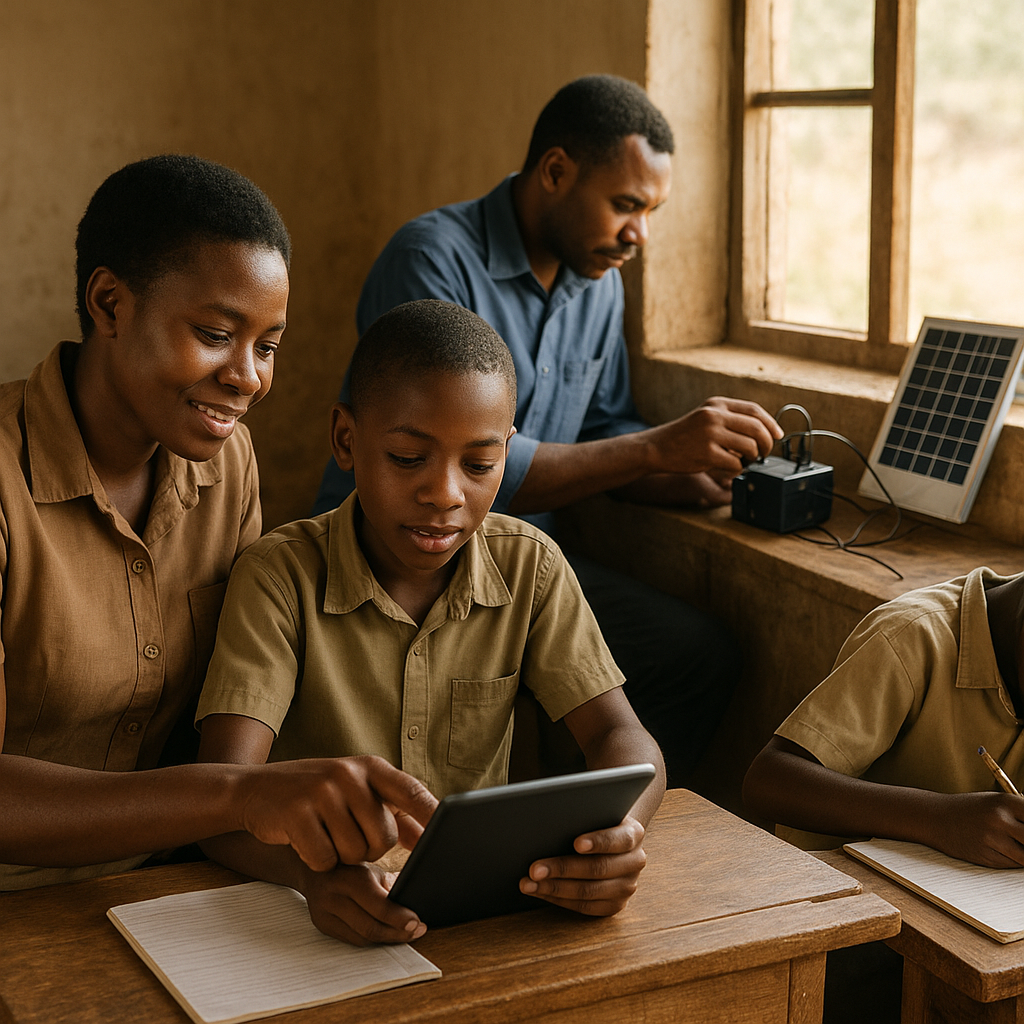
A project’s success is not measured by how modern it looks, but by whether students can keep learning when the connection fails, a device breaks or circumstances at home change. When partnerships plan for these realities from the start, remote education becomes a service learners can rely on—not just a promise.