
Introduction
Rivers, drought, pollution and wildlife do not stop at borders. Nor does pressure on land when livelihoods are at risk. Yet the institutions that decide how shared resources are used are usually divided along national lines.
This mismatch can turn disputes over access into political tests. A dam, grazing route or fishing restriction may seem like a technical matter, but communities downstream or across a border may see it as a question of power and survival. Cross-border cooperation can help address these concerns when affected communities have a voice in decisions.
Cross-border cooperation can address these pressures before they become grievances. It takes more than a diplomatic photo or temporary ceasefire. Lasting cooperation requires systems that let people challenge decisions, share information and see that the rules apply to everyone. Effective cross-border cooperation also depends on steady communication between institutions, not only on agreements made by national leaders.
Peacebuilding programs can help build those systems. They cannot make competition over resources disappear, but they can strengthen the institutions and relationships needed to manage it without violence. By supporting cross-border cooperation, they can help turn shared challenges into practical opportunities for joint action.
Who is involved
The people most directly affected are farmers, fishers, pastoralists, forest users and residents of border communities. They know how seasons change and how access works in practice, but are often brought into negotiations only after governments or technical agencies have set the agenda.
Participation must mean more than being present. If local representatives cannot influence an agreement or explain it to their neighbours, the process may appear inclusive while leaving the balance of power unchanged. Cross-border cooperation is more durable when local participants can shape decisions from the outset.
National governments are also central. They control laws, budgets, infrastructure and security forces, and can make shared resource management a state priority. But they may also use resource policy to assert sovereignty, particularly when domestic politics reward visible control over compromise.
Local authorities, basin commissions and other joint bodies link national policy with daily practice. To be effective, they need a clear mandate, reliable funding and the authority to respond when rules are broken. Without these, a committee may have little influence beyond the meeting room. Such bodies can give cross-border cooperation continuity beyond changes in political leadership.
Mediators and peacebuilding practitioners cannot replace these institutions. They can bring parties together, identify whose voices are missing and help negotiators turn competing claims into workable procedures. Technical experts can clarify water flows, land use and ecological change, but evidence alone cannot determine whose needs should come first. Their support can make cross-border cooperation more responsive to local concerns.
This distinction matters because natural resource management is often presented as a neutral exercise in efficiency. In practice, every allocation creates winners, costs and risks. Treating these choices as purely technical can hide political decisions rather than resolve them. Cross-border cooperation works best when these trade-offs are openly discussed.
Key factors
Agreements must be fair enough to gain acceptance and practical enough to follow. A rule that ignores seasonal livelihoods or customary access may look sound on paper but fail in practice. So can a negotiated rule with no clear responsibilities. Cross-border cooperation therefore needs clear commitments that people can understand and monitor.
Water governance shows why the details matter. Shared water depends on timing, quality and infrastructure, not just total volume. Reliable data, agreed methods for sharing it and advance notice of major changes can reduce suspicion—but only if every party considers the information accessible and credible. These measures give cross-border cooperation a stronger foundation when water is scarce.
Trust comes from consistent action, not declarations. When authorities publish decisions, explain how disputes will be heard and respond consistently to violations, communities have reason to use formal channels. When complaints vanish into bureaucracy, people may turn to informal enforcement or political pressure.
Conflict-sensitive development is essential when new infrastructure or conservation rules could affect access to land and income. A project may bring broad economic gains while concentrating the costs on one border community. Assessing who benefits, who bears the disruption and who can challenge the decision is part of conflict prevention, not an optional extra.
Representation matters, too. Women, young people and groups whose livelihoods are less visible in official planning may experience resource changes differently from recognized leaders. If they are left out, agreements may miss pressures that later undermine compliance.
Cooperation also needs room for disagreement. Joint bodies should not treat criticism as disloyalty. They need ways to hear appeals, mediate disputes and review rules when conditions change. Climate variability makes fixed arrangements especially fragile if they cannot be adjusted without reopening political disputes.
Regional dialogue can connect local problems with national decisions, but information must flow both ways. Officials need to hear how policies affect communities, and local participants need a clear account of what governments can and cannot change. Otherwise, consultation becomes a one-way delivery of decisions.
A practical example
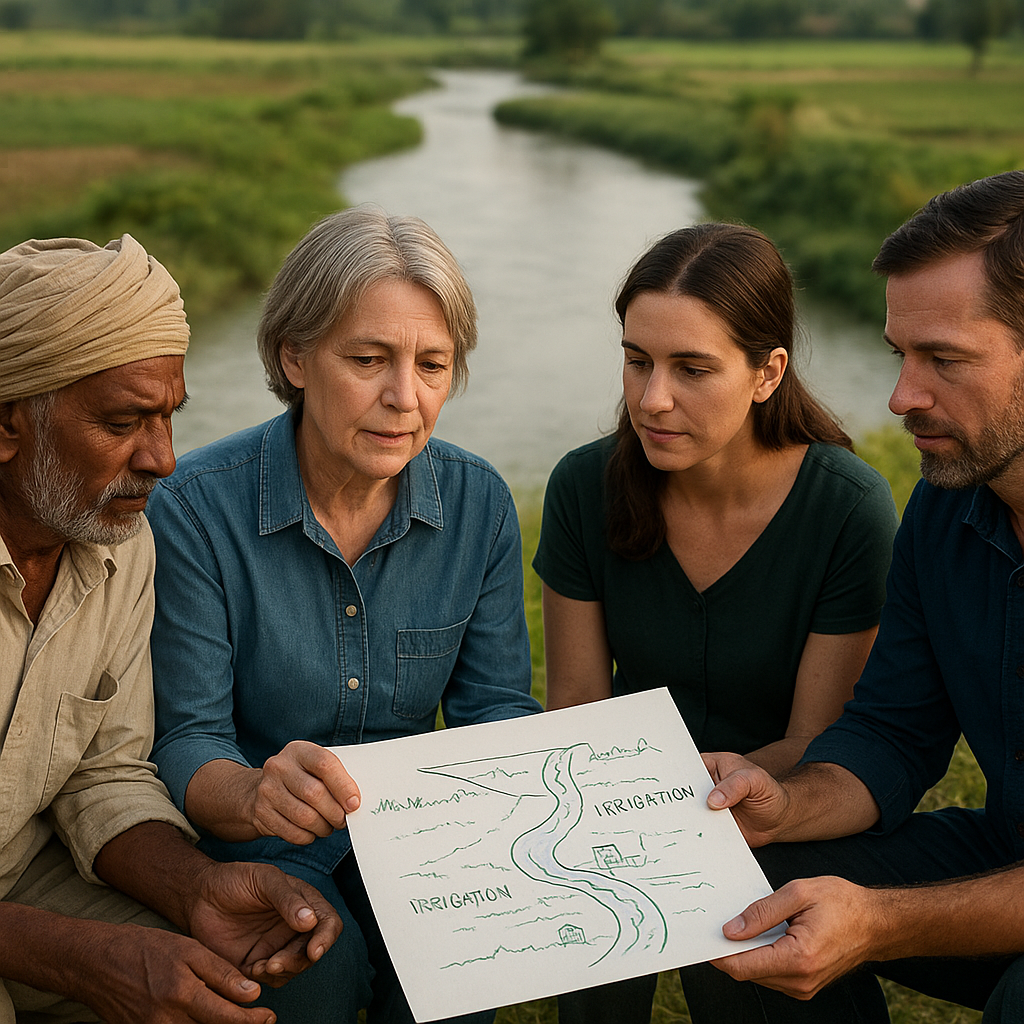
Imagine a dry season in a border region where several communities rely on the same river. Water levels fall, a proposed diversion worries people downstream, and rumours spread that one side is withholding information. With weak institutions, an environmental shock can quickly become a political contest.
A stronger response would be for a joint body to share verified monitoring data with everyone and explain what remains uncertain. Local representatives could meet with water officials and mediators, while an agreed process sets temporary access rules and a date to review them. The goal is not to erase competing needs, but to stop uncertainty from being mistaken for deliberate harm. This is cross-border cooperation in practice: shared information, clear procedures and a way to revisit decisions.
The arrangement is put to the test when one community says the temporary rules still leave it short. A credible process gives the claim a hearing, records the evidence and adjusts the rules if the facts support it. If the complaint is rejected, the reasons matter: people are more likely to accept an unfavourable decision when they understand how it was reached.
There is no guarantee of success. A government may refuse to share data, local elites may dominate representation, or a sudden shock may overwhelm the plan. Peacebuilding programs cannot remove these risks, but they can help reveal them sooner and give participants non-violent ways to respond.
This is why the existence of a formal agreement is not enough to measure cooperation. The real test is whether communities know the rules, institutions can enforce them fairly, and people can revisit disagreements without putting the relationship at risk.
Conclusion
Shared natural resources can deepen existing divisions, but they can also give people a practical reason to work together. Cooperation becomes credible when policy reflects local knowledge, governments follow transparent procedures and joint institutions have the authority to act.
The work is slow and often unglamorous: monitoring, explaining decisions, ensuring representation, resolving disputes and reviewing agreements. These are the practices that make cross-border cooperation more than a slogan—and that help peacebuilding programs serve their purpose when the next dry season, development proposal or political dispute arrives.