
Building Climate Literacy Into Teacher Training for Sustainable Communities
Introduction
Climate education faces a familiar challenge: it is too important to be an occasional lesson, but too broad to fall to a single teacher or department. Schools are expected to prepare young people for a changing climate, even though many educators have had little formal training in its causes, effects and possible responses.
This is not a lack of commitment but a problem of system design. Climate literacy belongs in teacher training alongside subject knowledge, classroom practice and assessment. The goal is not to turn every teacher into a climate scientist. It is to help educators explain key ideas accurately, connect them to their subjects and guide students in weighing choices while recognising uncertainty and their capacity to act. Strong climate literacy also helps students understand how decisions made at different levels can shape their futures.
The stakes extend beyond the classroom. A well-designed climate curriculum can connect scientific understanding to local decisions about energy, transport, food, water and land. In this way, sustainability education becomes more than a set of topics: it prepares students to take part in community life and build climate literacy through meaningful local examples.
Analysis of the teams and players
Climate learning works best as a team effort, not a contest left to one specialist. Science teachers can explain evidence and systems; geography can explore place and risk; history can trace responsibility and change. Language and arts subjects can help students interpret stories, values and competing claims. Mathematics can make data easier to understand, while vocational learning can link knowledge to practical work. Together, these subjects give students multiple ways to develop climate literacy.
Teachers can guide this work when the system gives them a clear shared direction. Without common goals, students may encounter climate change in disconnected fragments: a diagram in science, a weather story in geography and a recycling task in another class. A coherent curriculum helps core ideas recur and develop rather than simply repeat.
Teacher training should go beyond a briefing on climate facts. It should pair subject knowledge with practical teaching skills: distinguishing weather from climate, explaining evidence, addressing misconceptions and handling genuine disagreement. Educators also need to discuss impacts without leaving young people feeling powerless or blaming them for problems shaped by larger systems. Thoughtful training gives educators confidence to support climate literacy across different subjects.
School leaders and local partners also have a part to play. Teachers need time to plan, access to useful educator resources and support from colleagues. Universities, community organisations and public agencies can offer specialist knowledge, but schools must ensure it meets students’ needs and reflects local realities.
Key factors
First, establish a shared baseline. Climate literacy should cover the greenhouse effect, the difference between mitigation and adaptation, and how climate risks vary by place. Teaching should be accurate without suggesting that every detail is settled. Students need to learn how evidence is built, what uncertainty means and how to assess the quality of a claim. This foundation makes climate literacy useful for informed choices, not just recall.
Second, make learning interdisciplinary but specific. A climate curriculum should set out what students are expected to know and do at each stage. Cross-curricular projects can deepen that learning. For example, mapping local heat risks might combine geography, data analysis and public health, while studying building design could bring together physics, history and civic planning. These links enrich learning without diminishing the importance of each subject.
Third, prepare teachers to lead discussions. Climate change can touch on identity, family choices, politics and economic security. Educators need ways to manage disagreement, check sources and keep discussion grounded in evidence. This does not mean treating all views as equally well supported. It means helping students reason, ask questions and revise their views when evidence calls for it.
Fourth, connect lessons to local places. Students can better understand risks and responses by exploring issues around them, such as drainage, shade, public transport, energy use and food systems. Local examples should not suggest that one neighbourhood can solve a global problem. They show how broader forces affect communities and where collective decisions can help.
Finally, assess understanding, not slogans. Counting activities is easy; assessing learning is harder. Schools can check whether students can explain a process, interpret evidence, compare responses and identify trade-offs. This feedback helps teachers and curriculum leaders adjust instruction where students are struggling, rather than simply adding another awareness campaign.
Match scenario
Imagine a school preparing for a spell of hot weather. In a disjointed approach, one teacher gives a presentation on climate, another assigns a poster, and the topic ends with the unit. Students might remember some terms but not understand how evidence, design and community decisions connect.
In a stronger approach, staff have a shared foundation from their training. Science classes examine heat transfer and climate evidence; geography students map shade and exposure; mathematics classes analyse temperature data; and civics lessons explore who is most affected and how local priorities are set. Each subject retains its standards while contributing to a shared question.
Students then consider responses, such as planting trees for shade, changing how rooms are used or improving heat-alert messages. They look at who would benefit, what resources are needed and what limitations remain. The exercise is not a substitute for wider policy or infrastructure. It gives students a chance to practise informed decision-making and see how knowledge can support community resilience.
The key measure is not a dramatic final presentation. It is whether students can explain why a response might work, what evidence could help assess it and whose perspective might be missing. That reveals more about climate literacy than memorising a list of terms, and gives teachers a clear starting point for further learning.
Conclusion
Building climate literacy into teacher training takes time and more than adding a unit to an already crowded curriculum. It requires clear learning goals, subject-specific preparation, time to collaborate and reliable teaching resources. Without these, the burden falls unevenly on individual teachers. With them, climate learning can become part of everyday education and strengthen climate literacy over time.
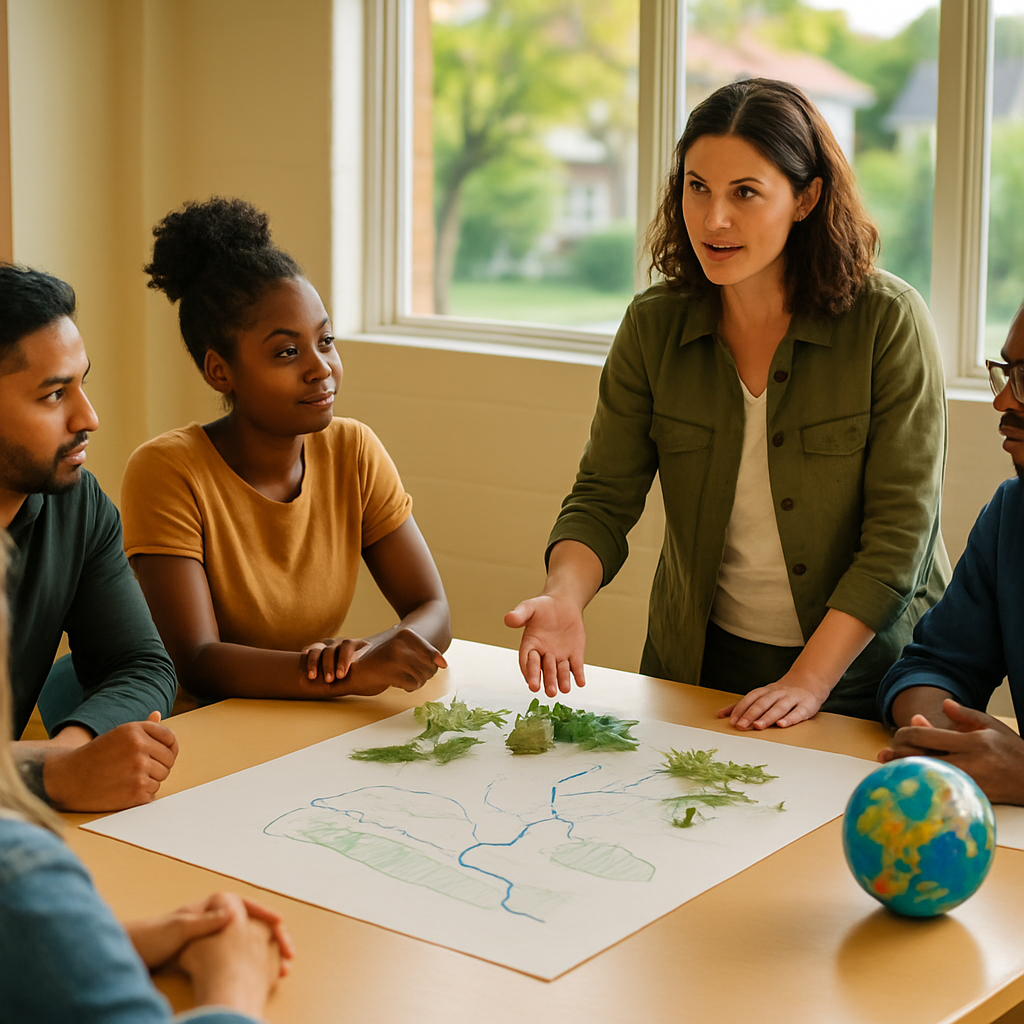
The aim is not to prescribe a single answer to every environmental challenge. It is to help young people understand the systems that shape their lives, weigh evidence and take part in decisions with others. When schools prepare teachers to do this consistently, sustainability education can connect knowledge with action, deepen climate literacy and help communities face change with greater understanding.